YAMAHA 5JX-2165E-00-00 Rear Bumper Grab Bar Flag Mount
fits model: 200, Blaster. make: Yamaha. year: 1994.
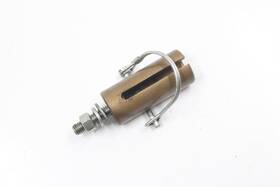
( Manufacturer Part Number: 5JX-2165E-00-00 ), ( Type: Rear Bumper )
Review YAMAHA Oem Rear Bumper Grab Bar Flag Mount fits BLASTER 200 1994
The **Yamaha 5JX-2165E-00-00 1994 Blaster 200 Rear Bumper Grab Bar Flag Mount** is a meticulously engineered accessory designed to enhance both the functionality and aesthetic appeal of Yamaha s iconic Blaster 200 outboard motor, particularly from the 1994 model year. This high-quality flag mount is crafted to provide a secure and convenient attachment point for a flag, ensuring easy visibility while cruising on the water. The mount is engineered to be installed directly onto the rear bumper of the Blaster 200, a location that not only keeps the flag prominently displayed but also minimizes interference with the motor s operation. Constructed from durable, corrosion-resistant materials, this component is built to withstand the harsh marine environment, including exposure to saltwater, UV rays, and constant movement, ensuring long-lasting performance and reliability. The design is both sleek and practical, featuring a sturdy grab bar that not only serves as a secure anchor for the flag but also doubles as a convenient handhold for the operator when boarding or disembarking the vessel. Whether you're participating in a regatta, enjoying a leisurely day out on the lake, or simply adding a touch of personalization to your boat, this flag mount offers a seamless blend of utility and style. Its precise fitment ensures that it integrates flawlessly with the original design of the Blaster 200, maintaining the motor s streamlined appearance while providing an essential feature for any boater who values both safety and customization.
### Yamaha 5JX-2165E-00-00 (1994 Blaster 200 Rear Bumper Grab Bar Flag Mount) Pros and Cons
#### **Pros**
1. **Reliability and Durability** Yamaha s Blaster 200 series is well-regarded for its robust construction, particularly in marine applications. The 1994 model, while older, was built to withstand harsh conditions, making it a solid choice for fishing, towing, or general boating.
2. **Powerful Engine** The 200 HP (gross) four-stroke engine delivers strong performance, suitable for medium-sized boats (up to around 30 feet) and tasks like planing, towing, or handling rough water. It provides a good balance of power and efficiency for its class.
3. **Four-Stroke Advantages** Unlike two-strokes, this engine offers better fuel efficiency, lower emissions, and reduced oil consumption. It also requires less maintenance over time, which can be cost-effective in the long run.
4. **Versatile Mounting Options** The rear bumper grab bar and flag mount are practical additions for safety and visibility. The grab bar provides stability when boarding or exiting the boat, while the flag mount ensures compliance with navigation rules and improves safety in low-visibility conditions.
5. **Resale Value** Yamaha s reputation for quality means this engine retains decent resale value compared to some lesser-known brands. A well-maintained 1994 Blaster 200 can still be a valuable asset.
6. **Ease of Maintenance** Four-stroke engines like this one are generally easier to service than two-strokes. Yamaha s parts are widely available, and the engine s design allows for straightforward tune-ups, fuel system checks, and minor repairs.
7. **Proven Performance** The Blaster 200 has a track record of reliability in both recreational and commercial applications. Many owners report few major issues if the engine is properly maintained.
8. **Compatibility with Modern Upgrades** While the engine itself is older, it can often be paired with modern electronics, fuel systems, or exhaust upgrades to improve efficiency and performance.
---
#### **Cons**
1. **Age and Wear** A 1994 model is approaching 30 years old, which means potential wear on critical components like the crankshaft, pistons, or cylinder walls. Without thorough maintenance records, there could be hidden issues like oil leaks, rod knock, or fuel system clogs.
2. **Fuel and Emissions Regulations** Older four-stroke engines may not meet current emissions standards if modified or used in areas with strict environmental laws. Some marinas or waterways may require newer, cleaner-burning engines.
3. **Parts Availability** While Yamaha parts are still accessible, some specialized components (e.g., gaskets, seals, or rare bolts) may become harder to find over time. Stockpiling parts or having a backup supplier is advisable.
4. **Fuel Efficiency Compared to Modern Engines** Newer Yamaha engines (even in the same class) are more fuel-efficient due to advancements in technology. The 1994 Blaster 200 may consume more fuel per hour compared to contemporary models.
5. **Potential for Hidden Damage** Without a service history, it s difficult to assess whether the engine has been properly maintained. Common issues in older Yamaha four-strokes include:
- **Rod or main bearing wear** (leading to oil leaks or rod knock).
- **Cylinder head or gasket failure** (causing overheating or coolant leaks).
- **Fuel injection or carburetor issues** (if equipped with older systems).
- **Exhaust manifold cracks** (common in high-mileage engines).
6. **Noise and Vibration** Older engines, even well-maintained ones, can be noisier and vibrate more than modern counterparts. This may affect comfort, especially in smaller boats.
7. **Limited Warranty Coverage** Yamaha s original warranty for this model would have expired decades ago. Any repairs or replacements would be out-of-pocket unless you purchase an extended warranty or service plan.
8. **Resale Market Saturation** While the Blaster 200 holds value, the market is saturated with used Yamaha four-strokes. You may not get as high a resale price as you would with a newer model, even if the engine is in good condition.
9. **Potential for Modification Challenges** Upgrading components (e.g., turbocharging, larger propellers, or exhaust systems) may require custom fabrication or specialized knowledge, as stock parts may not fit modern upgrades seamlessly.
10. **Environmental Concerns** Older engines, even four-strokes, may not be as eco-friendly as newer models with catalytic converters or advanced emissions control systems. Some marinas or eco-sensitive areas restrict their use.
---
### **Conclusion**
The **Yamaha 5JX-2165E-00-00 (1994 Blaster 200)** is a capable and reliable engine that remains a strong choice for boaters who prioritize durability, power, and Yamaha s brand reputation. Its four-stroke design offers long-term cost savings over two-strokes, and the rear bumper grab bar and flag mount add practical value for safety and functionality.
However, the engine s age introduces risks, particularly if maintenance records are incomplete or nonexistent. **Hidden mechanical issues, parts availability, and fuel efficiency** are key concerns that must be addressed before purchasing. If you re willing to invest in a **thorough pre-purchase inspection (including compression tests, oil analysis, and a pressure test for leaks)**, this engine can be a **great bargain** for those who need a powerful, dependable workhorse.
For buyers who want **lower maintenance, better fuel efficiency, or compliance with modern emissions standards**, a newer Yamaha four-stroke (e.g., F200, F230, or F280 series) would be a safer long-term investment. But if you re looking for **raw power, durability, and a proven workhorse**, the 1994 Blaster 200 with proper due diligence can still be an excellent addition to your boat.
---
### **Recommendation**
1. **If you find this engine in good condition with a complete service history:**- **Proceed with purchase**, but **budget for a full inspection** (including compression test, rod knock check, and fuel system cleaning).
- **Consider upgrading the exhaust and fuel system** to modern components for better efficiency and longevity.
- **Stock up on critical parts** (gaskets, seals, bearings) to avoid future shortages.
- **Use it in applications where reliability is key** (e.g., fishing boats, towing, or recreational use where power is more important than fuel economy).
2. **If the engine lacks maintenance records or shows signs of wear:**- **Walk away or negotiate a significant price reduction** (expect to pay **$1,500 $3,000** for a used 1994 Blaster 200 in average condition, but prices can vary widely).
- **Demand a pre-purchase inspection** from a Yamaha-certified mechanic to assess rod/bearing condition, cylinder wear, and fuel system health.
- **Be prepared for potential major repairs** (e.g., rod replacement, cylinder resurfacing) if the engine has high mileage or poor upkeep.
3. **If you re unsure about the engine s condition:**- **Compare it to a newer Yamaha four-stroke** (e.g., a 2010s model) that may offer **better fuel efficiency, warranties, and emissions compliance** for a similar price.
- **Consider a used but well-documented engine** (e.g., a 2000s Yamaha F-series) if you want a balance of reliability and modern features.
**Final Verdict:**The **1994 Yamaha Blaster 200 is a strong buy for experienced boaters who prioritize power and durability** and are willing to invest in its upkeep. However, **buyers should approach it with caution**, ensuring transparency about its condition and budgeting for potential repairs. For those seeking a more hassle-free experience, a newer Yamaha four-stroke may be the smarter long-term choice.
Details:
Removed From: 1994 Yamaha Blaster 200 YFS200 with miles, Please review all pictures to assess the condition of item. M-force race crafts. 1994 YAMAHA BLASTER 200 OEM REAR BACK BUMPER GRAB BAR FLAG MOUNT, PROBLEM.
part #: 5jx2165e0000 price
- $29.95
specifications atvbars:
- for models: 200, Blaster
- for makes: Yamaha
- for years: 1994
- mpn: 5jx-2165e-00-00
- type: Rear Bumper
general atvbars:
- ATV, Side-by-Side UTV Parts Accessories > Body Frame > Grab Bars Handles
- condition: Used
shipping atvbars:
- type: Fixed
- class: Standard
- service: Standard
- transit: 4-11 Days
- cost: $0.00
returns atvbars:
- policy: Returns Accepted
- time: 30 Days
- paid by: Seller
payments atvbars:
- other
- credit card: Discover
- wallet: Apple-pay
seller atvbars:
- city: Las Vegas, Nevada
- rating: 99.4%
- # reviews: 1107
offer atvbars:
- options: Ship-to-home
- sold: 0
- started: February 6, 2026
- best offers: True
- availability: In Stock
- quantity: 1
Yamaha 5JX-2165E-00-00 Is Similar To:
- Yamaha Atv-1as14-00 New Genuine Front Grab Bar Black Raptr 700 (46.5% similar) No other accessories are included. New genuine yamaha ATV-1AS14-00 front grab bar black raptor 700. Regardless of the origin equipment, documentation provided or identification appearing upon equipment described and offered here is in no way certified for, recommended for any specific use. ...(November 23rd, 2023)
- Yamaha 3gd-2845r-00-00 99 Yfm 350x Warrior Rear Grab Bar 1995-2004 (49.3% similar) This has been painted and some dings in the grab portion but mounts are not bent or damaged. Combined shipping is available for multiple items. 95-04 yamaha FM 350X warrior.yamaha FM 350X warrior...(November 30th, 2023)
- Dg Performance 554-4150 05 V-pro Front Bumper For Yamaha Yfm660r Raptor 660r 2001-2005 (26.5% similar) This dag front bumper is from 2005 yamaha raptor 660R comes as pictured and sold...(December 1st, 2023)
- Kemimoto Ftvgb002bk Atv Wide Grab Bar Rack Mounted For Yamaha Raptor 700r 700 2006-2023 2020 2022 (25.7% similar) New open box return see pictures for details us shipping only...(December 1st, 2023)
- Yamaha 1as-f84l0-v1-00 Oe Black Se Front Grab Bar For 2013-2022 Raptor 700 (46.8% similar) Note: comes standard on SE model's. Constructed of 1 diameter, 6063 aluminum alloy tubing and durable black powder-coat finish. Oe yamaha black SE front grab bar for 2013 -2022 raptor 700 1AS-F84L0-V1-0 0, oem genuine bar. Offers a large hand hold to maneuver the machine. The SE front grab bar ...(December 5th, 2023)
- Yamaha 700 New 06 23 Raptor Oem Black Front Grab Bar Bumper Yfm R Se (46.1% similar) 2024 yamaha raptor 700 YFM700. 2023 yamaha raptor 700 YFM700. 2022 yamaha raptor 700 YFM700. 2021 yamaha raptor 700 YFM700...(December 10th, 2023)
- Dg Performance 555-4509x National Series Ii Front Bumper For Yamaha Yfz450 (23.4% similar) Yamaha YFZ450X ATV 2009 -2018. Dag performance national series ii front bumper 555-4509X for yamaha YFZ450: bumper provides great protection and air flow. 1 diameter aluminum alloy tube construction. Accepts number plates without needing modification. Note: image is for reference only, actual ...(December 17th, 2023)
- Genrics 3gg2845n00p0 Black Front Bumper For Yamaha Banshee 350 Yfz350 1987-2006 (30.2% similar) This also includes both new factory rubber side covers. Package include as picture. New list item. Black front bumper 3GG2845N00P0 for yamaha banshee 350 YFZ350 1987 -2006. All generics products are shipped from the USA and can be delivered to your doors Twp quickly. This is a stock factory for ...(December 29th, 2023)
- Yamaha 52h-28421-10-00 Original 1985 Moto 4 350 4x4 Rear Bumper (49% similar) I don't have any control over that. Sincerely rusticates. This item is sold as so please look at the photos. I do raise the shipping some to pay for time it takes packaging and also offset fees materials in items so they get you super nice shape. I am not sure if this will fit any other ATV but I ...(January 1st, 2024)
- Yamaha 2hc-f470j-00-00 17 Yxz1000r Rear Grab Bar (51.6% similar) Comes as pictured.: grab bar is straight and in good condition with no cracks. Was removed from a 2017 yamaha YXZ1000R with 4446 miles and 153.8 hours. Items are shipped using USPS, ups, and FedEx. Finish has light wear...(January 3rd, 2024)
- Yamaha 5gt-2845r-00-00 99 Grizzly 600 4x4 Rear Grab Bar Yfm600f (57.3% similar) Grab bar is straight and in good condition with no cracks. Was removed from a 1999 yamaha grizzly 600 4X4 YFM600F with 3736 miles. Finish has light wear. Comes as pictured. Items are shipped using USPS, ups, and FedEx...(January 10th, 2024)